Committing treason, more akin to blasphemy, as they were citizens of a nation still influenced by decades of a belief in ‘divine right’ did not come easily to the Founding Fathers. This belief that kings were appointed by God was waning by 1763 when the British, as a result of really poor management, raised taxes in the colonies resulting in the American Revolution which helped to put an end to divine right altogether.
The Founding Fathers are often referred to as a mono-cultural group, but they were hardly that. The regional, religious, political, and historical diversity of the group that represented 13 distinct governments reviewed and debated 90 declarations before establishing the “Committee of 5” to write what became the Declaration of Independence. The Committee in turn, gave the job to Thomas Jefferson who submitted the first draft on June 28, 1776. After a few days of debate and modification the final document was signed on the Fourth of July, 1776. (This date has been contested by historians, but an almost-final draft of the document was printed and posted on July Fourth.)
The authors and signers of the Declaration of Independence had to agree to disagree if they were to gain their freedom from tyranny. They had to debate deep philosophical and political differences and stay in that room during a sweltering Philadelphia summer until they truly represented unitedstates. The Continental Congress had found enough strongly shared common interests and beliefs to sever their ties to their homeland forever.
The Declaration of Independence Has Six Sections
The Introduction: Which begins “When in the Course of human events, it becomes necessary for one people to dissolve the political bands which have connected them with another,”
The Preamble: Another incredible beginning: “We hold these truths to be self-evident, that all men are created equal, that they are endowed by their Creator with certain unalienable Rights, that among these are Life, Liberty and the pursuit of Happiness.”
The Indictment: An outline of the offenses the authors claim were committed by the King of England, including “For imposing Taxes on us without our Consent:”
The Denunciation: The justification for the declaration, “Nor have we been wanting in attentions to our British brethren. We have warned them from time to time of attempts by their legislature to extend an unwarrantable jurisdiction over us.:”
The Conclusion: Establishes “That these united Colonies are, and of Right ought to be Free and Independent States; that they are Absolved from all Allegiance to the British Crown, and that all political connection between them and the State of Great Britain, is and ought to be totally dissolved;.”
The Signatures: This evidence makes it impossible for the 56 signers to deny their commitment to the content of the document.
An Evolving Inclusion Strategic Plan!
Now that the newly formed United States of America declared their independence from
Great Britain they had to make themselves independent in fact. It took another 13 years before George Washington was inaugurated. The fact that the document signed in 1776 excluded the majority of the people under its jurisdiction does not diminish its impact. As we evolved as a nation the words of The Declaration of Independence were used to argue for the enfranchisement of all U.S. Citizens. 87 years dragged on before slavery was abolished. Another 3 years elapsed before former male slaves gained the right to vote. 54 more years passed before women who were U.S. Citizens acquired the right to vote. The powerful words contained in this document are used to assert the rights of people all over the world and act as a catalyst for defending freedom, representation and democracy everywhere.
As you celebrate this holiday, please remember to read The Declaration of Independence and think about where we might be without our diversity and inclusion, in other words, without our independence. The Declaration Of Independence
Last week I came across an essay that I wrote in 1996 examining the role that a city’s inhabitants play on transforming their space and how they are the architects of the future, especially through their diversity of thought. This essay is as relevant today as it was when I wrote it. I asserted that cities are comprised of people whose lives, experiences and perspectives are the pulse of any community. I contended that the diversity of human thought and experience breathes life into every city’s skyscrapers, tenements and developments. Though ever-changing skylines may reveal the physical history of cities, it is the people themselves who define the culture of cities. As Lewis Mumford, observed in The City in History, the common denominator of all cities is that they bring together “not only the physical means but the human agents needed to pass on and enlarge.. [our cultural] heritage.” Consequently, multifarious voices of city dwellers speak to us from the past and inform our future, enabling us to recognize diversity as a vital, rejuvenating element rather than a reason for urban demise.
The Message
The recent developments in Turkey and Brazil are powerful illustrations of the capacity of diverse people to act inclusively when they share common goals. Like many of you I have been paying close attention to these events. I have been observing how people respond when they believe that they have been excluded. The people who have been filling streets and plazas in Turkish and Brazilian cities represent a diverse range of class, race, gender, sexual orientation, religion, age, education level, profession, parental status, marital status, and political affiliation. They have come to send a message to the leaders of their nations: “We matter! What we think matters! Listen to us!”
Our Space
When developers or politicians make decisions that result in an altered public landscape without the informed consent of the public they risk the wrath of that body. Few people who grew up in New York in the 1950s and 1960s hear the name of Robert Moses without thinking about the neighborhoods in New York City that were destroyed as a result of his arbitrary decisions to build highways that cut off the life blood of those communities by separating residences from shops and schools and services. The South Bronx suffered the most critical damage as a result of Mr. Moses’ actions and the urban blight that became synonymous with that borough has yet to be completely cured.
The people of Turkey and Brazil have spoken up and reasserted their right to decide the fate of their cities, neighborhoods, and public spaces. This is not just a response to the use of their hard earned tax dollars, but an expression of revulsion that they have been told, by the actions of their nations’ leaders that they have no voice, no opinion that matters, no stake in the outcome of decisions.
Never Say “Just A Housewife!”
People matter, not just in an abstract way, but in a very real way. As the personal stories of those who are risking a great deal to raise their voices begin to emerge, I hear what can be described as spontaneous harmony. One voice is that of Ayse Diskaya, a 48-year-old housewife who Murad Sezer wrote about for Reuters: http://blogs.reuters.com/photographers-blog/2013/06/12/taksim-square-one-womans-protest/ Ms. Diskaya’s story is a poignant one of a women who has risen above adversity.
Diverse Voices
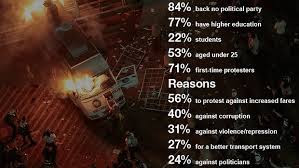
As I stated above the protestors represent a diverse range of people, thoughts, ideas and issues. People are also protesting for various reasons and causes. That is the beauty of democracy, we can really agree to disagree and still stand side-by-side in opposition to being excluded. You were wondering when I would get to the word inclusion, weren’t you? Well, people need to be included. It really is quite simple. As a result of the protests in Turkey the demolition of Gezi Park has been halted, at least temporarily. In Brazil, the bus fare increase that sparked the protest has been rescinded. The protesters in both nations have cited many issues as the reason for their outrage.
Datafolha 18 June 2013
The New Public Arena
One way that people are speaking up all over the world is via social media, Twitter and Facebook, in particular. Those who formerly gathered in the public arena, the local plaza, and the corner pub, have all convened on the internet with access to all in unprecedented and unpredictable ways. The diversity of opinion that is exchanged in the span of one hour of any event is mind boggling! People are free to say whatever they want about any subject and to get feedback from a huge number of other people. This may seemed chaotic at first, but order really does emerge and people really do let each other know when they are being rude or ignorant or anti-social. The democracy and inclusion of their diversity is what makes social media so astronomically successful.
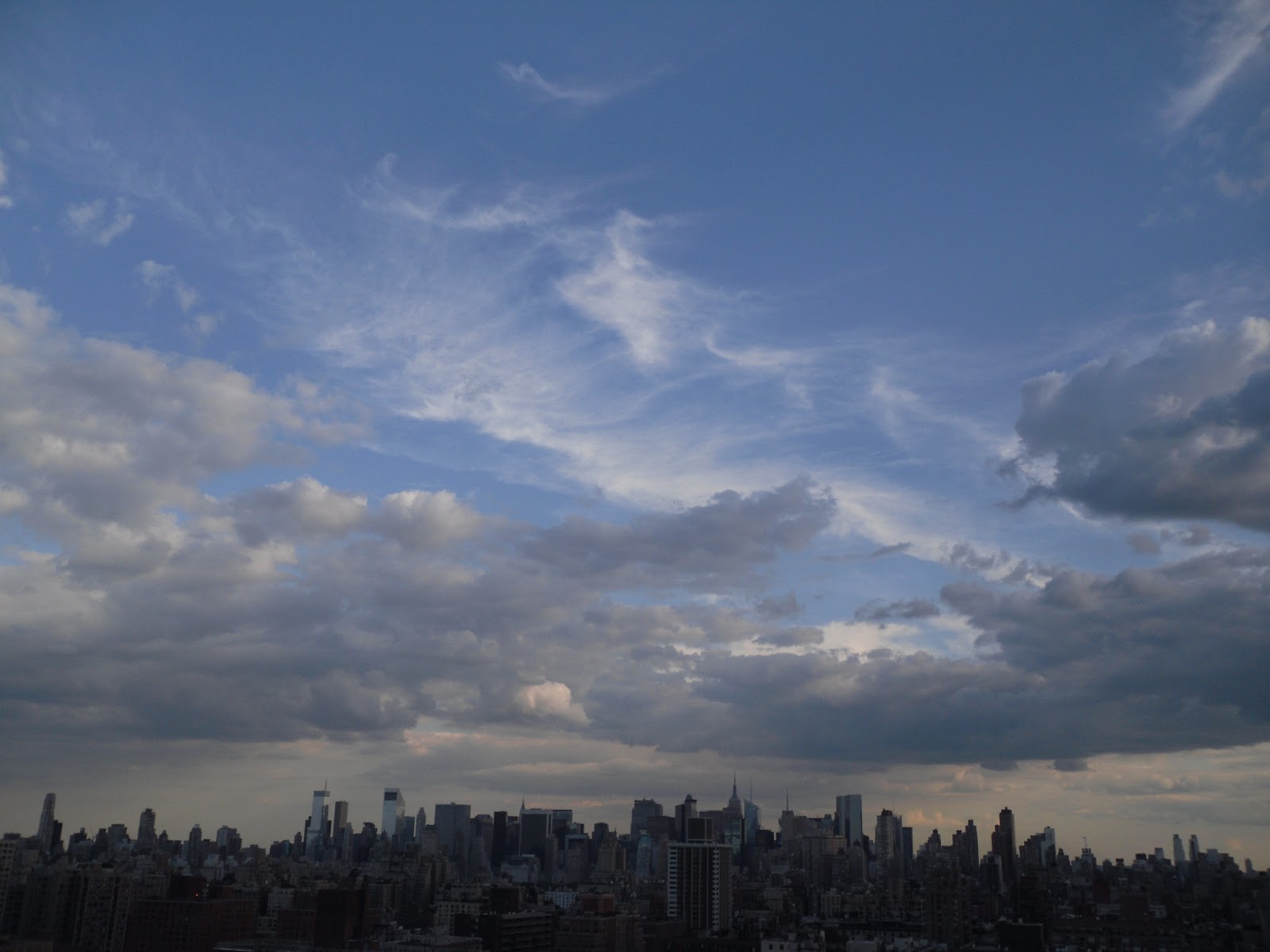
When people sing in harmony, the sky is the limit!
W. Wark, 2011
People need to be included in decision making whether those decisions are about the alteration of public space, their access to health care and education, their right to free speech, or their right to assembly. Demos, after all means “the people” in ancient Greek. We cannot have democracy without the people. Just as we cannot have cities without the people.